


Understanding your electricity needs
As you switch to electric appliances or add a home battery or EV charger, it is important to make sure your electrical set up is designed to safely handle the increase in electricity use.
When your property uses more electricity than your electrical setup can safely support, your service fuse will operate (commonly referred to as a blown fuse). This causes a power outage, and we'll need to send our crew to replace the fuse before your power can be restored.
Using several high-energy appliances at the same time may be enough to cause a blown fuse. The risk increases if you have an electric vehicle (EV) or battery, particularly if you're charging them while using other high-energy appliances such as air conditioning or an oven.
If you have an EV or battery, or you’re considering one, we recommend having a registered electrician inspect your electrical wiring. This includes your service fuse, mains cable and circuit breaker. They can confirm whether it's suitable for your current and future electricity needs, or whether you should apply for a supply upgrade.
Midday Power Saver plans that offer free power in the middle of the day are a great way to reduce electricity costs, however you need to ensure your electrical setup can handle the increased demand during this 3-hour window.
How to safely use more electricity in the home
If you have high-energy equipment, particularly an EV or battery, it’s important to make sure your home’s electrical setup can handle the extra electricity demand. This is particularly important if you typically use these high-energy appliances and devices at the same time.
Here are three simple steps to help safely manage your higher electricity use:
- Spread out when you use high-energy equipment throughout the day.
- Set a charging limit on your EV charger or an import limit on your home battery inverter.
- Ask a registered electrician to check your electrical setup, including your service fuse, mains cable and circuit breaker. It’s important they consider your current and future electricity needs, along with your electricity use patterns – for example, if you have solar, you may use more electricity from the network over winter. They will also advise if you need to apply for a supply upgrade.
How to set a battery import limit or EV charging limit
Most manufacturers allow an import limit to be set on your battery and charging limit on your EV charger to help prevent your home from using more electricity from the network than your electrical setup can support.
Your battery installer can remotely set the import limit for you at any time. For your EV charger, you can set this yourself within the manufacturer’s app.
The right limit for your property depends on your electrical setup, including the size of your service fuse, mains cable and circuit breaker. Your limit should be set to match the size of the smallest component. A registered electrician can determine the right import and charging limits for your property.
If you need a supply upgrade
A supply upgrade at your property will allow you to increase the amount of electricity you can safely use. This could involve increasing the size of your service fuse or upgrading from a single-phase to three-phase electricity supply (if available in your area).
Your electrician can help you understand what you need and will submit a supply upgrade application with us on your behalf. We charge a fee for a customer supply upgrade as works need to be completed on our electricity network.
Separately, your electrician will also charge a fee for any work needed on your own property to support the supply upgrade.
How to apply
Your electrician needs to submit the application through our online portal, myEnergy, along with a Certificate of Electrical Safety.
What is a service fuse?
A service fuse is a safety device that protects customers, their electrical setup and the network if electrical faults are detected. A service fuse operates by cutting power off to your property when it detects a problem, or ‘fault’, service limits are exceeded or unsafe conditions emerge.
On older properties, it’s often located near the roofline. On newer or renovated properties, it’s usually inside the switchboard on an external wall.
Why do service fuses blow?
A service fuse may blow if there’s a problem with your property’s wiring or you used more electricity from the network than your electrical setup is designed to handle. The common causes include:
- Using several high-energy devices or appliances at once – you may be using a large amount of electricity at the same time. For example, charging your EV or battery whilst also running electric heating, your oven or other high-energy equipment.
- Wear and tear – service fuses can deteriorate when subject to high energy use over time.
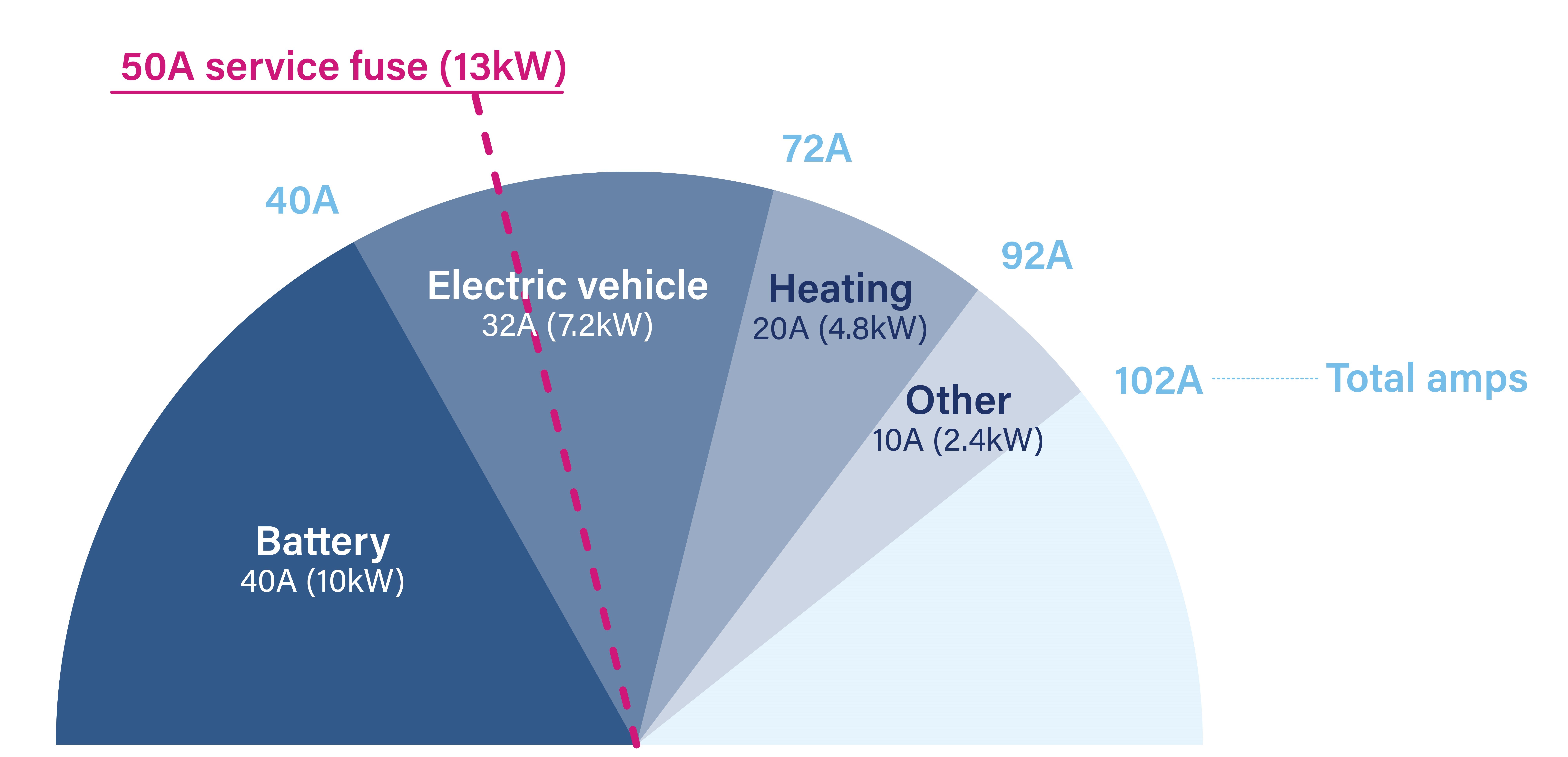
The image below demonstrates how a property can use more electricity than their service fuse can support. The most common fuse size in Victoria is 50 amps, although fuse sizes can range from 30 to 80 amps depending on the age and location of the property.
Seasonal trends
We see more blown fuses during winter when solar generation is lower and properties rely more on power from the network.
Heatwaves can also increase the risk of a blown fuse, as you're more likely to run air conditioning while using other high-energy equipment, such as an EV charger or battery.
Electricity used by common household equipment
The list below shows the average amount of electricity used by common household equipment. Actual electricity use will vary depending on the equipment’s manufacturer, model and size.
| Equipment | Amps (A) | Kilowatts (kW) |
|---|---|---|
| Battery (on charge) | 40 | 10 |
| Electric vehicle | 32 | 7.3 |
| Induction cooktop | 25 | 5.8 |
| Ducted reverse cycle heating/cooling | 20 | 4.8 |
| Oven | 12 | 3 |
| Clothes dryer | 10 | 2.4 |
| Dishwasher | 10 | 2.4 |
| Split system heating/cooling | 6 | 1.5 |